Tshechus & their Tentative Calendar
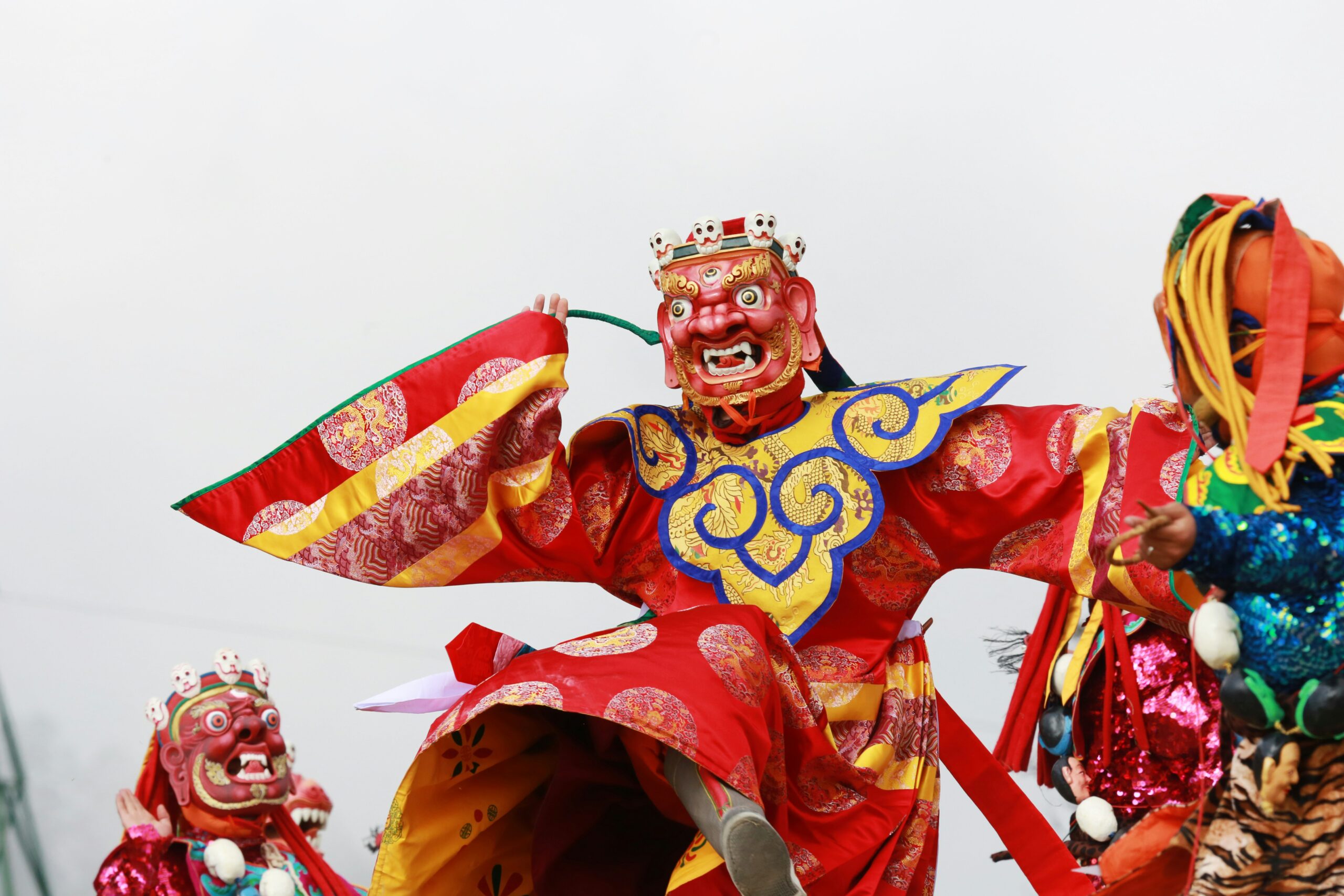
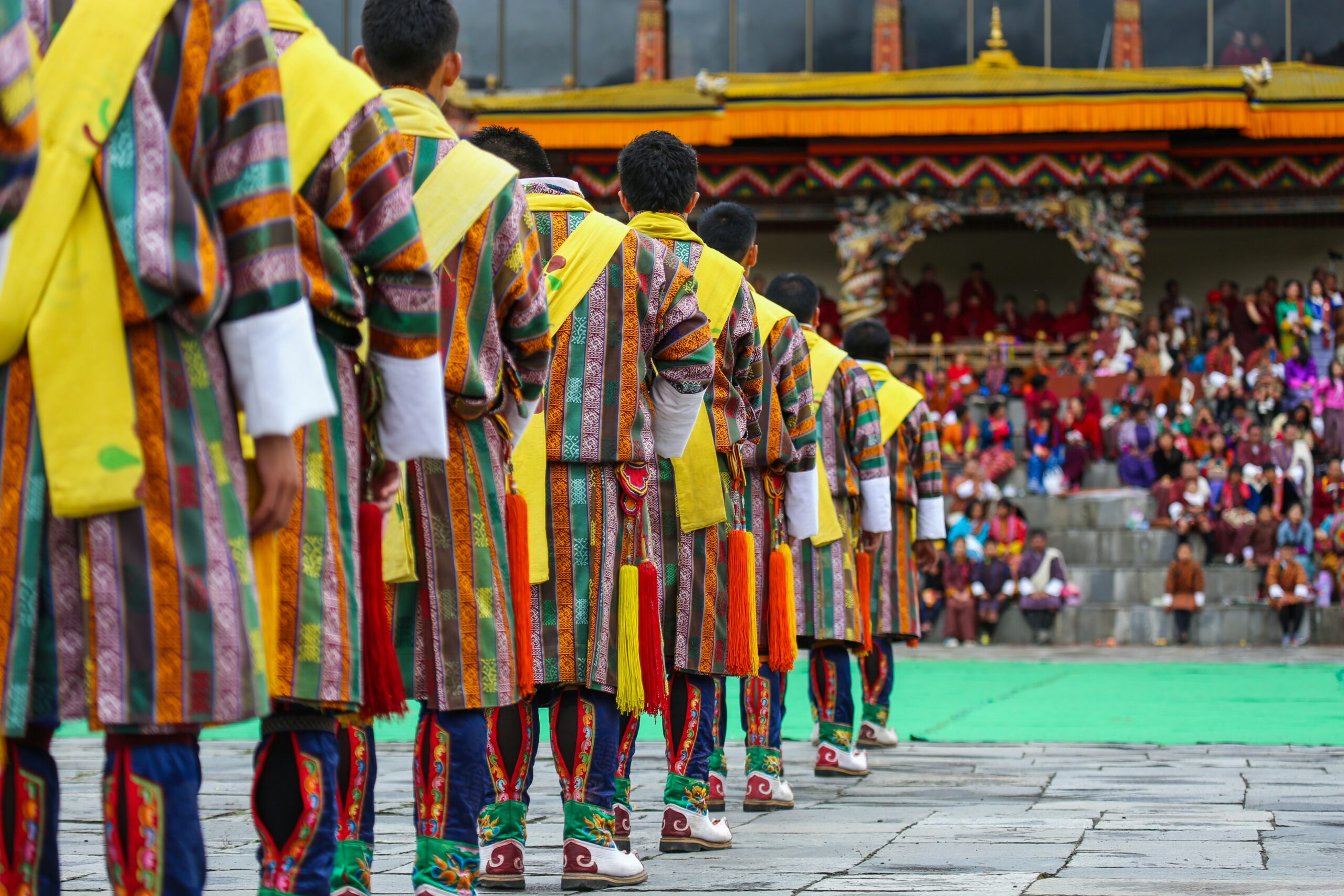
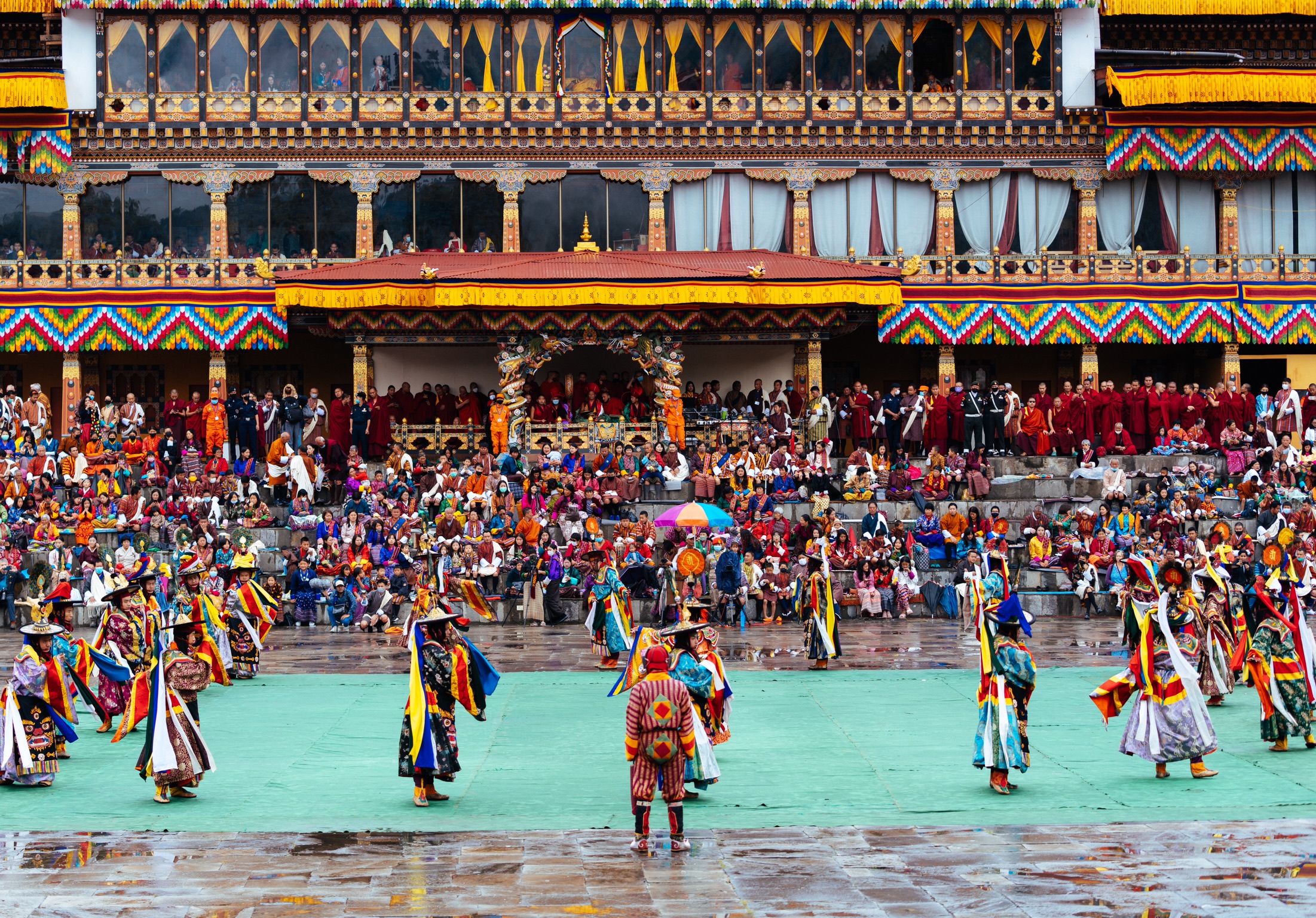
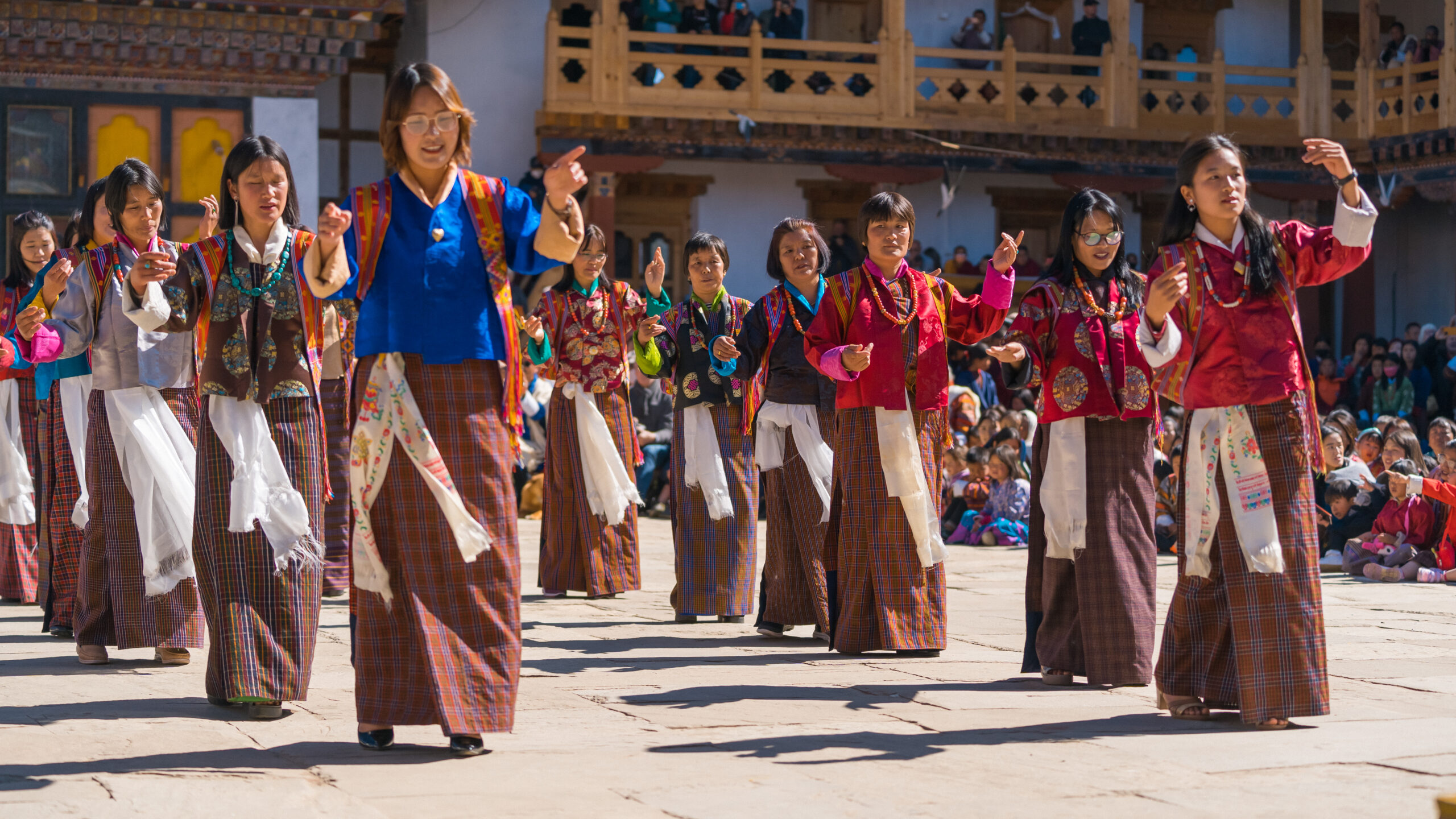
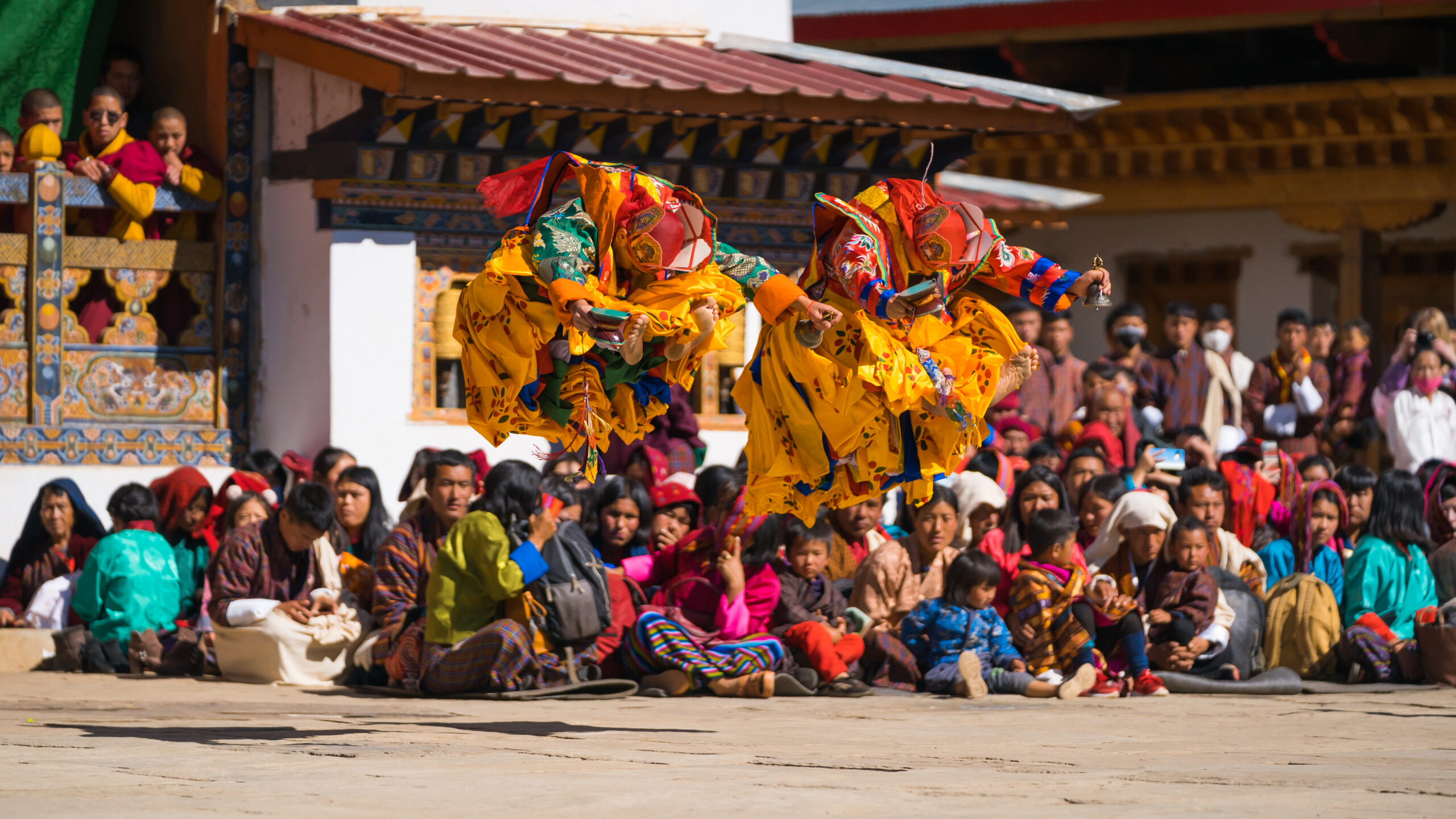
Tshechu is a religious festival where monks and laymen perform mask dances and women perform folk dances. Tshechus are usually conducted in Dzongs (fortress), monasteries and temples. Tshechus are grand events where entire communities come together to witness religious mask and folk dances, receive blessings, gain merits and socialize. Some major and prominent Tshechus and Drubchens are highlighted below:

Punakha Drubchen (3rd week of February)
Drubchen means “Great Accomplishment”. Its purpose is to achieve profound inner purification, generate merits and remove obstacles. Punakha Drubchen is to showcase to the general public the brief history on the construction of Dzong (fortress), internal conflict, external invasion during the construction of Dzong in 1637. Mask dances and folk dances are performed by the Central Monastic Body and the public of Punakha.
Punakha Tshechu (4th week of February)
The Punakha Tshechu, which is one of the most popular Tshechus, is held right after the Punakha Drubchen. Mask and folk dances are performed by monks and laymen. The unfurling of the Thongdrol (a large tapestry) of Guru Rimpoche (the 2nd Buddha) is the main attraction of the festival. It is believed that mere sight of the Thongdrol liberates and cleanses an onlooker from sins.
Che-nga Kora (1st week of March)
Che-nga means 15th day of a month of the Bhutanese calendar. Kora means circumambulation. On the 15th day of the first month of the Bhutanese calendar, hundreds of people, including people from Tawang in the Indian state of Arunachal Pradesh, gather to circumambulate the Chorten (Stupa) which was built over 300 years ago and named as Chorten Kora. It is believed that a live-sixteen years old girl, believed to be the virgin-Dakini daughter of a nobility in Tawang, was entombed live in the stupa as a relic on the 15th day of the first month. This day is considered as an auspicious and hundreds of people go around the stupa, chanting mantras and singing folklores. Chorten Kora is located at Trashiyangtse district in eastern part of Bhutan.
Namgang Kora (3rd week of March)
The Bhutanese term “Namgang” refers to the new moon day or the 30th day of the Bhutanese lunar month. Namgang Kora is conducted on the last day of the 1st month of Bhutanese lunar calendar. It is one of the oldest religious festivals of eastern Bhutan which is held annually at the Chorten Kora, Trashiyangtse in eastern Bhutan. The festivities involve circumambulation of the Chorten Kora (Stupa) with chanting of mantras and singing, similar to Che-nga Kora. Both Bhutanese and people from Tawang participate in this festival.
Gomkora Tshechu (4th week of March)
Gomphu Kora is the actual name but locals call it Gomkora in short. Gom means meditation and phu means cave. Gomphu means meditation cave where Guru Rimpoche (2nd Buddha) meditated about few centuries ago. Every year, toward the end of March, thousands of people including people from bordering state of Arunachal Pradesh of India, gather here. People do “kora” or circumambulate around the cave and the temple attached to the cave the whole night, chanting mantras and singing local songs with phrases like “Go around Gomphu Kora today for tomorrow may be too late”. Tshechu lasts for 3 days.
Gasa Tshechu (4th week of March)
The annual 3-day Gasa Tshechu is the biggest festival in the small district of Gasa in the northeast Bhutan. Gasa is home to highlander communities who depend on livestock and cordyceps for livelihood. While many mask dances are performed, the unique and distinct local folk dances are also performed.
Tsirang Tshechu (4th week of March)
The annual Tsirang Tshechu is the biggest festival in Tsirang district which is located in southern Bhutan. Apart from different kind of mask dances, local and traditional folk dances are also performed. The Tshechu is performed for three days and the last day is concluded with display of large Thongdrel (Tapestry) of Guru Rimpoche (2nd Buddha).
Zhemgang Tshechu (4th week of March)
Zhemgang Dzongkhag, which is located in central Bhutan, holds its annual Tshechu towards end of March every year. Mask and folk dances are performed by monks and laymen. Tshechu is for three days and concludes with unfurling of large Thongdrel.
Daga Tashiyangtsi Tshechu (4th week of March)
This one-day Tshechu is performed in the Daga Dzong in Dagana Dzongkhag located in southern Bhutan. Apart from mask dances performed by monks, different cultural programs are also displayed to entertain the public who comes from afar places to witness the Tshechu.
Paro Tshechu (4th week of March)
The Paro Tshechu is one of the biggest and most popular festivals in Bhutan. Apart from Bhutanese, 100s of tourists attend the Tshechu to witness mask and folk dances. The last day of the Tshechu is the most auspicious one as the most revered Guru Thongdrel (large tapestry of 2nd Buddha), which is believed to have spoken, is unfurled early in the morning. Thousands of people line up to get blessing from the Thongdrel.
Kurjey Tshechu (4th week of June)
Bumthang Dzongkhag is called the spiritual heartland of Bhutan is considered the birth place of Bhutanese Buddhism with many ancient monasteries, sacred sites and holy relics. One such holy sites is Kurjey where Guru Rimpoche (the 2nd Buddha) meditated in a cave in the 8th century. Kurjey Tshechu is dedicated to and associated with Guru Rimpoche. It is one-day festival and the day is closed with unfurling of a giant Guru Thongdrel.
Takila Chham (4th week of August)
Takila is one of the most sacred and religious places in Lhuentse Dzongkhag of eastern Bhutan. Many important festivals of nearby communities take place at Takila where the largest statue of Guru Rimpoche (173 feet tall), made of bronze and gilded with pure gold, is located. It is considered as world’s largest Guru Rimpoche statue.
Thimphu Dromchoe (2nd week of September)
The Thimphu Dromchoe displays the sacred dances dedicated to the protecting deity of Bhutan, Palden Lhamo. It’s a one-day festival and precedes the popular three-day Thimphu Tshechu.
Wangdue Tshechu (3rd week of September)
The Wangdue Tshechu of Wangduephodrang Dzongkhag is performed in the courtyard of the Wangdue Dzong for 3 days. The Tshechu is well known for the Raksha Mangchham or the dance of the Ox. It concludes with the unfurling of the Guru Tshengye Thongdrel (Tapestry of Eight Manifestation of Guru Rimpoche).
Thimphu Tshechu (3rd week of September)
Thimphu Tshechu is one of the biggest festivals in Bhutan. The festival is performed in Tashichhodzong (fortress) in the capital city for three days. Thousands of people, including tourists, on their best national dress, witness the tshechu. Different kinds of mask and folk dances are performed.
Tamzhing Phala Choedpa (3rd week of September)
Tamzhing Lakhang (Temple) was built by great treasure revealer Terton Pema Lingpa in 1501 in Bumthang district. It is known for its ancient murals, sacred relics and spiritual legacy. Three-days festival, with mask and folk dances, is held every year to commemorate great saint’s legacy.
Thangbi Mewang (3rd week of September)
A four-day festival is performed at Thangbi village, under Bumthang district, in an ancient temple where the Mewang Ceremony (Fire Blessing) is the main event, apart from other mask and folk dances.
Gangtey Tshechu (3rd week of September)
A three-day festival is held in Gangtey Goenpa in Phobjikha valley under Wangduephodrang district. It is a winter roosting place of the migratory and rare black-necked cranes.
Jakar Tshechu (3rd week of October)
Jakar Tshechu, which is also called Bumthang Dzongkhag (District) Tshechu, is held for 3 days at Jakar Dzong. Mask and folk dances are displayed along with other festivities.
Chukha Tshechu (3rd week of October)
The annual Chukha Tshechu is held in October with mask dances and traditional folk songs for three days.
Pemagatshel Tshechu (4th week of October)
The annual Tshechu of Pemagatshel District is held annually with elaborate festivities, including mask dances and traditional folk dances.
Jambay Lhakhang Drup (4th week of October)
Jambay Lakhang (Temple) is one of the 108 temples built by the King Songtsen Gampo of Tibet in one day in the 7th century. Its annual festival includes, apart from normal mask and folk dances, the Tercham (the Naked Dance) and Mewang (Fire Blessing). It’s a five-day program.
Goenpoi Dromchoe, Trongsa (2nd week of November)
Goenpoi Dromchoe of Trongsa district is held in the historic Trongsa Dzong, located in central Bhutan. To get its blessings, large number of people, both local and tourists attend the festival.
Mongar Tshechu (3rd week of November)
Many unique and indigenous mask and folk dances are performed during the 5-day festivals. Apart from the local people from the region, many guests from outside the country attend the festival.
Trashigang Tshechu (3rd week of November)
Another biggest annual festival of eastern Bhutan is Trashigang Tshechu conducted in the courtyard of the Dzong. It attracts large crowd of local people from the eastern region and guests from outside the country. Different kinds of mask and folk dances are performed during the 3 days program.
Druk Wangyel Tshechu, Dochula (13 December)
Druk Wangyel Tshechu (festival) is an annual unique festival performed by the Royal Bhutan Army. It is hosted at Dochula Pass (3100 m) as a tribute to His Majesty the Fourth King of Bhutan for His selfless, fearless, courageous and dedicated service to the people and the nation during his glorious reign.
Trongsa Tshechu (3rd week of December)
The Trongsa Tshechu is known as the oldest Tshechu and is performed inside the courtyard of the magnificent Dzong (Fortress) which was once the center of power. All kinds of unique mask and folk dances are performed for 3 days.
Lhuentse Tshechu (3rd week of December)
Lhuentse Dzongkhag (District) is the farthest district from the capital city, Thimphu, and is located in eastern region of the country. Tshechu is performed in the courtyard of the magnificent Dzong which is perched on a hillock. Apart from entertaining mask and unique local folk dances, the most appealing aspect of the festivities is admiring the most intricately woven attire called “Kishuthara”, worn by ladies. Lhuentse is known for it.
Daga Trashiyangtse Tshechu (3rd week of December)
The Five-Day Tshechu is conducted annually at Tshechupang outside the Dzong. It is believed that the people of Dagana District are protected by five local deities and the Tshechu is conducted to invoke and honour these deities. Various mask and local folk dances are performed.